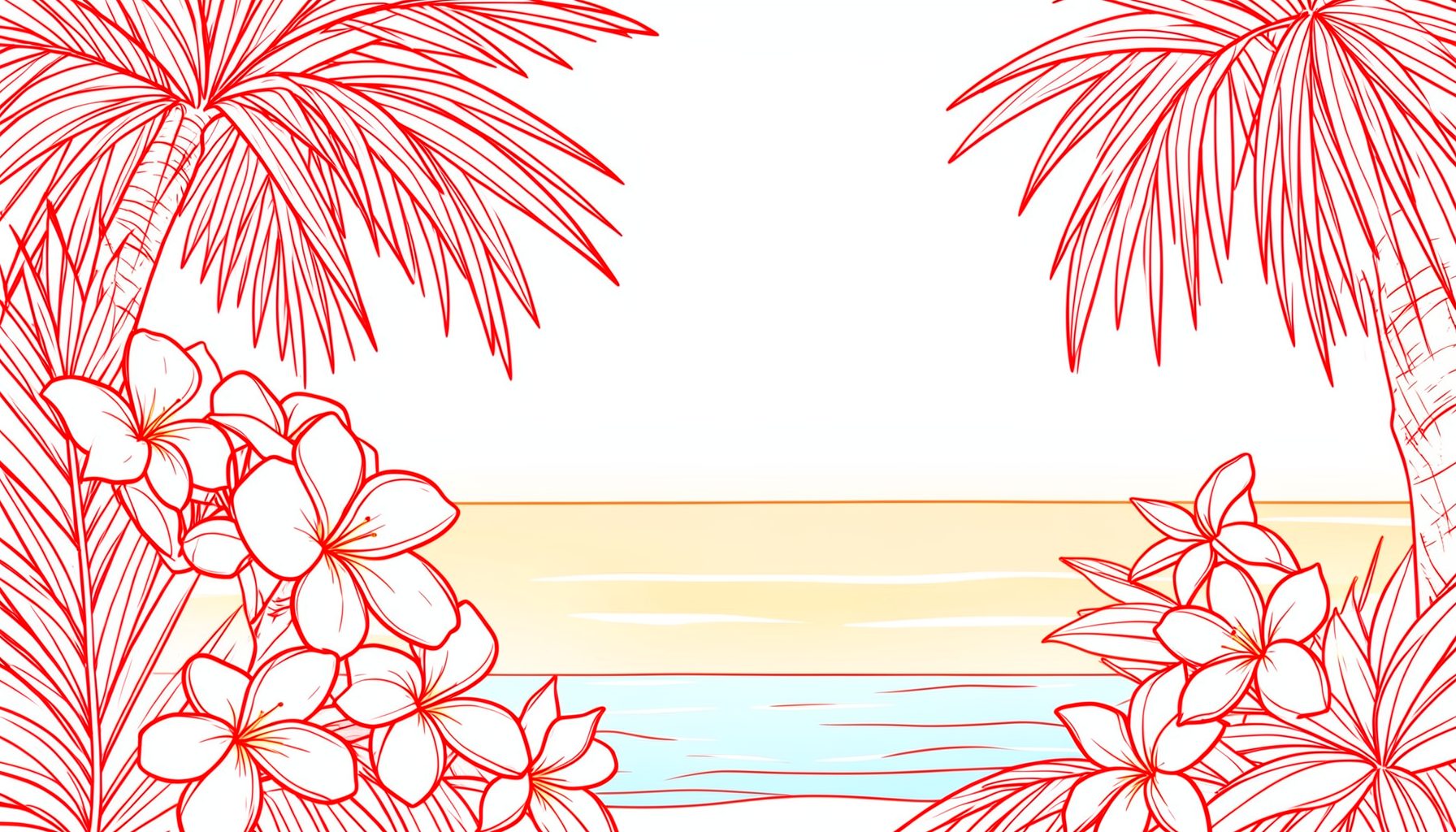
The history of the Hawaiian quilt in textile design
Hawaiian quilts are recognized for their bold silhouettes, botanical motifs, and remarkable symmetry. A single design may suggest breadfruit leaves, hibiscus, lehua blossoms, sea life, or a traditional landscape, all arranged across a contrasting background. The result is decorative, but it also reflects the history of Hawaiʻi and the way local makers adapted foreign textile techniques into a distinctive art form.
Unlike kapa, the bark-cloth textile made by Native Hawaiians before Western contact, the Hawaiian quilt developed from imported cotton, sewing tools, and patchwork traditions. Over time, Hawaiian women transformed those materials into a visual language rooted in the islands’ plants, stories, spirituality, and sense of place.
That history gives the quilt a special role in modern island-inspired design. Its influence appears in clothing, home décor, wedding details, gifts, and accessories, where flowing leaves and stylized flowers continue to communicate aloha through pattern.
From kapa to cotton quilting
Before quilting became established, Native Hawaiian textile culture centered on kapa. Makers created it from the inner bark of trees such as wauke, beating and felting fibers into sheets that could be softened, decorated, and layered into clothing, bedding, and ceremonial items. Kapa patterns often used natural dyes and repeated marks, creating a strong foundation for later Hawaiian textile design.
Missionaries and other settlers introduced Western sewing practices during the early nineteenth century. Cotton cloth, needles, scissors, and printed fabrics gradually became more available, while women learned techniques such as piecing, appliqué, and quilting. These methods were not simply copied. Hawaiian makers selected the techniques that suited local materials and aesthetics, then reshaped them into something recognizably their own.
The signature one-piece appliqué
The most distinctive Hawaiian quilt construction is often called one-piece appliqué. Instead of assembling many small fabric patches, the maker folds a large piece of cloth into sections, cuts a symmetrical pattern, and unfolds it to reveal a radiating design. The cut fabric is then appliquéd onto a contrasting background and secured with fine stitching.
This folding method creates the familiar eightfold symmetry associated with many Hawaiian quilts. The design may spread from the center like a flower, fan, or leaf canopy, while the quilting stitches echo the appliqué shapes. Curved lines, repeated arcs, and flowing contours give the surface movement and make the finished textile easy to recognize from across a room.
Plants, places, and symbolic patterns
Hawaiian quilt motifs frequently draw from the natural environment. Kalo leaves, breadfruit, pineapple, coconut palms, sea turtles, fish, flowers, and volcanic forms can all become sources of inspiration. Some designs are closely tied to a family, place, event, or personal memory, so a pattern may carry meaning beyond its visual appeal.
Color also contributes to the story. A deep red appliqué on white may feel formal and dramatic, while yellow, green, blue, or coral can create a lighter tropical effect. Traditional work often favors a restrained two-color arrangement, allowing the silhouette and quilting lines to remain prominent. Contemporary textile artists may use additional shades, printed cotton, or modern fabrics while retaining the characteristic symmetry.
| Design feature | Traditional Hawaiian quilt | Modern island-inspired adaptation |
|---|---|---|
| Construction | Large folded appliqué cut into a symmetrical shape | Printed, embroidered, pieced, or digitally rendered motifs |
| Main imagery | Native plants, flowers, leaves, animals, and place-based forms | Tropical foliage, ocean symbols, hibiscus, palms, and abstract forms |
| Color approach | Often two strongly contrasting colors | Wider palettes, gradients, prints, and mixed textures |
| Surface detail | Dense echo quilting around the appliqué | Machine stitching, screen printing, embroidery, or simplified outlines |
| Common uses | Bedcovers, family heirlooms, ceremonial and household textiles | Apparel, bags, décor, stationery, wedding details, and gifts |
Quilting as family and community practice
A Hawaiian quilt could take months or years to complete, particularly when the stitching was done by hand. The process encouraged patience and collaboration. Friends and relatives might help with cutting, appliqué, or quilting, turning a large textile into a shared project rather than an isolated household task.
Quilts also became meaningful heirlooms. A completed piece could commemorate a wedding, birth, anniversary, or important family connection. The maker’s stitches, chosen colors, and motif selection preserved a personal record, while the quilt itself passed from one generation to the next.
This communal dimension remains relevant to Hawaiian celebrations today. Textile patterns can complement coordinated family clothing, destination weddings, and island-themed gatherings without replacing the deeper value of handmade work. For an event with a hula element, learning about ʻauana and kahiko costumes can also help hosts distinguish between contemporary and traditional visual traditions.
From heirloom bedcovers to fashion design
The influence of Hawaiian quilting extends beyond blankets. Designers borrow the bold outline of a leaf, the radial structure of an eight-part composition, or the rhythm of echo quilting for aloha shirts, dresses, skirts, jackets, and children’s clothing. These elements can be printed, embroidered, appliquéd, or translated into woven textures.
On clothing, simplified motifs are especially effective. A small flower or palm silhouette can decorate a pocket or sleeve, while a larger botanical arrangement can become the centerpiece of a dress or matching family set. The visual language works across casual beachwear and more formal celebration attire because it combines strong geometry with organic shapes.
Accessories provide another natural setting for quilt-inspired design. Tote bags, clutches, scarves, hair pieces, jewelry packaging, and home accents can use a single motif without reproducing a complete quilt. This approach preserves the recognizable island character while making the pattern practical for everyday use.
Choosing quilt-inspired pieces with care
A beautiful pattern is most meaningful when its context is respected. Shoppers and event planners can look for designs that identify their inspiration clearly, favor products made with attention to construction, and avoid treating every tropical image as interchangeable with Hawaiian tradition. Understanding the difference between a historical quilt pattern and a generic floral print makes purchasing decisions more thoughtful.
For celebrations, quilt-influenced details can coordinate with leis, aloha shirts, dresses, table décor, and gifts. A bridal shower could include handmade textile accents alongside a DIY lei-making party, creating a tactile activity that complements the broader island theme.
- Choose motifs connected to recognizable Hawaiian plants, landscapes, or textile traditions.
- Pair bold quilt-inspired prints with simple accessories so the central pattern remains visible.
- Use coordinated colors across family outfits without requiring every person to wear the same design.
- Ask about fabric quality, construction, sizing, and care before purchasing apparel or home textiles.
- Select handmade or artisan-style gifts when the occasion calls for a lasting keepsake.
Why the tradition still matters
The Hawaiian quilt continues to evolve because it balances adaptation with continuity. Its materials may change, and its motifs may appear on new products, but the central ideas remain: symmetry, patience, natural imagery, and connection. Each modern interpretation adds to a long conversation between inherited technique and contemporary island life.
For Tydel Hawaii shoppers, quilt-inspired merchandise can bring that visual heritage into weddings, family gatherings, beach occasions, and everyday wardrobes. Explore aloha clothing, accessories, gifts, and celebration pieces that reflect the warmth of Hawaiian design, and choose patterns that let the spirit of the islands accompany your next meaningful occasion.