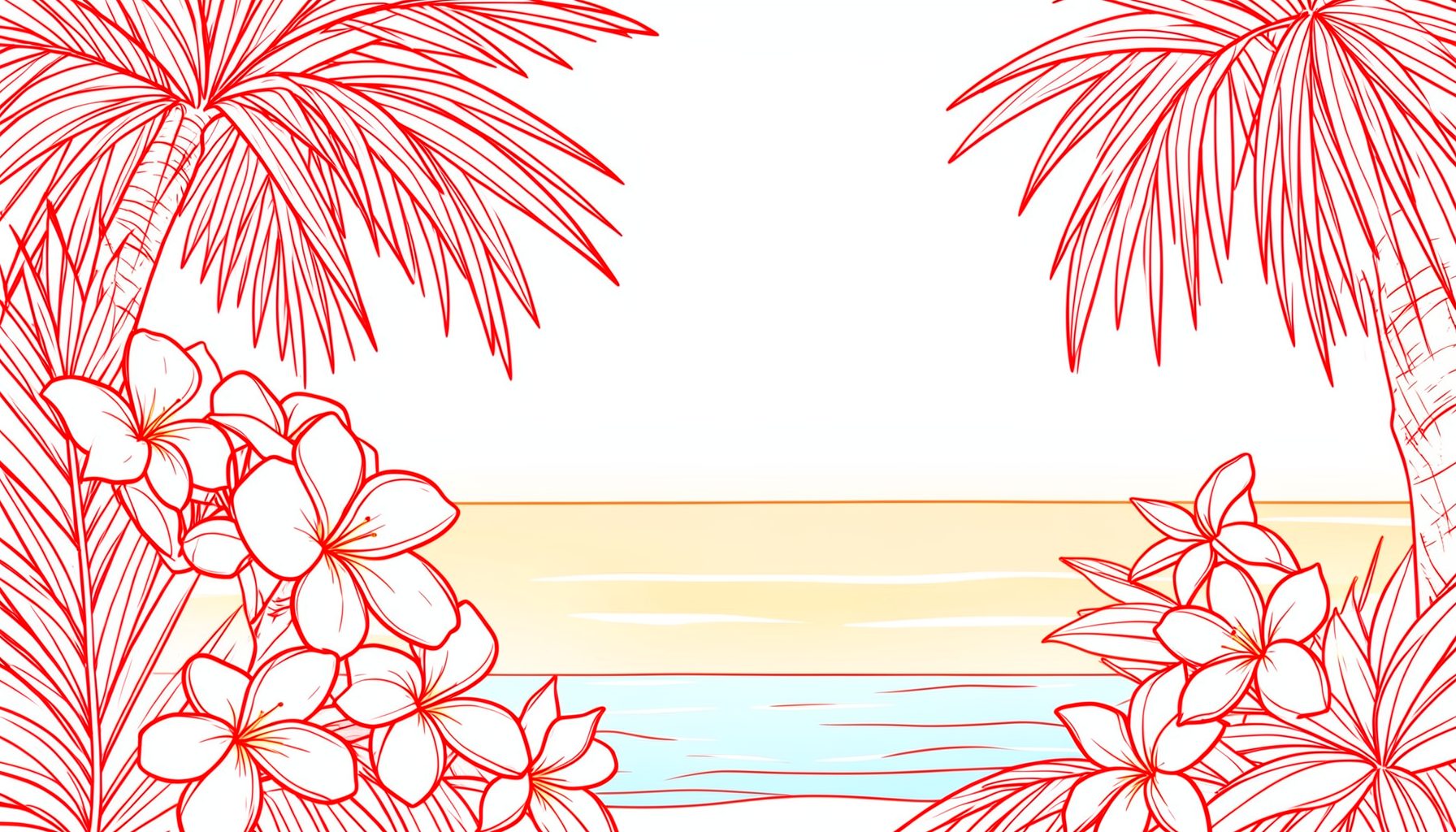
From Barkcloth Motifs to Modern Aloha Style
Hawaiian print patterns carry stories of place, ancestry, celebration, and everyday island life. Their colors and symbols have changed with shifting technology, tourism, fashion, and cultural renewal, yet many designs still draw from the natural world surrounding the Hawaiian Islands.
The familiar aloha shirt is only one expression of this visual tradition. Floral dresses, pareos, children’s outfits, wedding accessories, jewelry, and home accents also show how tropical motifs have moved from handmade textiles into contemporary wardrobes.
Understanding this design history makes it easier to recognize the difference between a classic island print, a vintage-inspired pattern, and a modern interpretation. It also adds meaning when selecting coordinated outfits for a family gathering, destination wedding, or beach celebration.
Early motifs and native materials
Long before commercial Hawaiian fabric became popular, Polynesian communities used natural materials and skilled handwork to create clothing and ceremonial objects. Kapa, or barkcloth, was made from beaten plant fibers and decorated with repeated marks, geometric forms, and impressions inspired by the environment.
Traditional visual language often emphasized leaves, waves, feathers, shells, birds, and other elements connected to land and ocean. These patterns were not simply decorative. Their use could communicate identity, rank, family connections, spiritual beliefs, or the purpose of a ceremony.
The lei became another important source of visual inspiration. Flower, foliage, and seed combinations influenced later textile designs, while the act of giving a lei remained connected to welcome, affection, honor, and celebration. The cultural background of this practice is explored in traditional lei making, offering useful context for anyone choosing leis or floral accessories.
Commercial textiles in the early twentieth century
During the late nineteenth and early twentieth centuries, Hawaii became increasingly connected to global trade and tourism. Imported fabrics, sewing machines, and new printing methods expanded the possibilities for local clothing makers. Designers began combining Asian textile influences with Pacific motifs and Western garment shapes.
Early resort wear often featured restrained floral arrangements, botanical borders, and repeating geometric designs. Rayon became especially important because it was lightweight, comfortable in warm weather, and capable of holding vivid colors. These practical qualities helped tropical shirts and dresses move beyond ceremonial use into daily island fashion.
The first widely recognized aloha shirts were shaped by this blend of influences. Some featured Japanese-inspired construction and fabric traditions, while others used bold floral prints associated with Hawaii’s landscape. The result was a garment that felt relaxed, colorful, and distinctly connected to the islands.
The colorful postwar aloha era
The 1940s and 1950s brought major growth in Hawaiian tourism and popular culture. Aloha shirts appeared in movies, advertisements, hotel shops, and department stores on the mainland. Improved screen-printing techniques made it easier to produce strong colors and intricate scenes at commercial scale.
Prints from this period often used large hibiscus blooms, palm trees, canoes, ocean waves, and sunset landscapes. Some designs showed highly detailed scenic panels, while others relied on dense allover repeats. Red, turquoise, yellow, coral, and deep green became especially recognizable in tropical fashion.
The postwar period also established the contrast between subtle and expressive Hawaiian styling. A dark shirt with small botanical motifs could look polished at a restaurant, while a bright shirt with oversized flowers projected a more festive resort mood. That range remains central to aloha clothing today.
| Period | Common motifs | Color direction | Typical influence |
|---|---|---|---|
| Early 1900s | Leaves, flowers, geometric marks | Natural browns and muted tones | Kapa, Asian textiles, local craft |
| 1930s–1940s | Botanical repeats, ocean elements | Balanced tropical shades | Rayon production and resort wear |
| 1950s–1960s | Hibiscus, palms, scenic panels | Bright coral, aqua, yellow, red | Tourism, film, screen printing |
| 1970s–1990s | Oversized florals, surf graphics | Saturated and contrasting colors | Youth culture and casual fashion |
| Today | Native plants, heritage symbols, abstract botanicals | Earth tones and digital brights | Cultural design, sustainability, global fashion |
From bold retro prints to everyday island wear
The 1970s and 1980s introduced a stronger casual and youthful energy. Designers enlarged flowers, intensified contrast, and experimented with surf-inspired imagery. Palm silhouettes, hibiscus blooms, ocean horizons, and graphic lettering appeared on shirts, shorts, swimwear, and accessories.
At the same time, vintage Hawaiian prints became associated with retro style. The familiar combination of warm oranges, avocado greens, mustard yellows, and rich browns reflected broader fashion trends of the era. Reproduction prints often borrowed the visual character of mid-century resort clothing while adapting it for modern cuts.
By the 1990s, Hawaiian-inspired patterns had entered mainstream global fashion. Some interpretations were playful and commercial, while others focused on refined botanical arrangements. Matching shirts and dresses became popular for vacations, reunions, and photographs, creating a foundation for today’s coordinated family and couple collections.
Cultural renewal and contemporary pattern design
Modern Hawaiian print design includes a wider conversation about cultural responsibility and representation. Many artists and brands look beyond generalized “tropical” imagery to highlight native plants, traditional tools, place names, kapa-inspired textures, and stories connected to specific islands or communities.
This shift does not mean contemporary patterns must look historically exact. Digital printing allows designers to layer watercolor effects, photographic details, fine linework, and abstract shapes. A modern shirt may feature a simplified breadfruit leaf, while a formal dress may use a tonal pattern that quietly references ocean currents or endemic flowers.
Color choices have expanded as well. Earthy greens, volcanic charcoal, sand, and ocean blue can create an understated look, while neon coral and electric turquoise offer a more energetic interpretation. The best designs balance visual appeal with a clear sense of place.
Matching prints for celebrations and travel
Hawaiian patterns work especially well for events because they can create visual unity without making every garment identical. A wedding party might coordinate through a shared floral palette, while each person wears a different silhouette. Couples can choose complementary prints, and families can combine related colors across men’s shirts, women’s dresses, and children’s outfits.
For destination weddings, lightweight fabrics and breathable construction matter as much as the pattern itself. Smaller motifs often photograph elegantly in formal settings, while larger flowers and scenic designs suit welcome parties, luaus, and informal beach gatherings. Accessories such as leis, hair flowers, shell jewelry, and woven bags can reinforce the theme without overwhelming the clothing.
Print scale also affects how an outfit feels. Large motifs make a confident statement and can emphasize a relaxed vacation mood. Medium-scale florals are versatile for dinners and celebrations, while small repeats tend to look polished and easy to coordinate with solid colors.
Practical ways to select a meaningful print
A thoughtful purchase begins with the occasion, the wearer, and the story the pattern should convey. Consider whether the garment is intended for daily use, a ceremony, a family portrait, or a gift. A classic botanical shirt may be worn for years, while a highly seasonal design may be better suited to a one-time celebration.
When ordering coordinated apparel or accessories, consistency in color is usually more important than matching every motif exactly. This approach creates a unified group appearance while allowing each individual to choose a comfortable and flattering garment.
- Choose native-flower or botanical motifs for a grounded island feel.
- Use scenic and ocean-inspired prints for relaxed travel and beach events.
- Pair vivid patterns with simple accessories and neutral footwear.
- Select related colors instead of identical designs for family coordination.
- Check fabric weight, sizing, and care instructions before placing a bulk order.
The history of Hawaiian print patterns shows how visual traditions can adapt without losing their connection to the islands. From handmade barkcloth marks to digitally printed aloha shirts, each era has added new techniques, colors, and interpretations. Explore Tydel Hawaii’s collection of Hawaiian clothing, leis, jewelry, gifts, and celebration essentials to find a pattern that suits your next island-inspired moment.